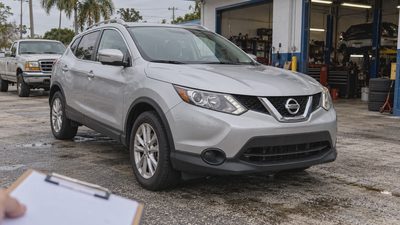
A used Nissan Versa is a smart inexpensive car when its total starting cost leaves room for maintenance and its transmission, equipment, and condition fit your daily use. Nissan Versa MPG can help keep running costs manageable, but the highest highway figure does not automatically identify the least expensive car to own.
Begin by separating the sedan from the Versa Note hatchback, then identify the model year and transmission. Those details change the fuel-economy comparison and the inspection.I shortlist a plain car with understandable needs rather than spend the entire budget on a newer-looking example whose ownership costs depend on unanswered questions. I saw this pattern repeatedly at the service counter: 2015–2018 Versa CVTs with missing maintenance records often came back later with engagement noise or delayed response, while manual versions with a normal clutch inspection stayed more predictable. That is not a universal rule, but it changes how much repair reserve I keep after the purchase.
Identify which Versa the advertisement describes
“Versa” can appear in listings for different body styles. This guide focuses on U.S. sedans; do not copy their cargo, transmission, or MPG descriptions onto a Versa Note without checking that model separately.
A 2015 Nissan Versa sedan offered manual, conventional automatic, and Xtronic CVT versions depending on trim, as shown in Nissan’s 2015 press kit. Consequently, “automatic” is not enough information to compare two advertisements from that year.
For a 2018 Nissan Versa, check the original configuration and production-period equipment. Nissan’s 2018.5 documentation also distinguishes the sedan from the Note. A year filter is useful, but it cannot replace a VIN and an equipment check.
The redesigned 2020 Nissan Versa belongs in a separate shopping comparison. A later car may offer equipment you value, while an older one may leave a larger repair reserve. Compare those benefits explicitly instead of assuming the newer number settles the decision.
Compare Nissan Versa gas mileage by transmission
For Nissan Versa gas mileage, the published U.S. figures below describe specified new vehicles under standardized testing. They are not measured results for the used car in your search, and the highway number is not a forecast for short trips.
Published configuration | Combined MPG | Highway MPG |
|---|---|---|
2015 sedan, Xtronic CVT | 35 | 40 |
2020 sedan, Xtronic CVT | 35 | 40 |
2020 sedan, five-speed manual | 30 | 35 |
2025 sedan, Xtronic CVT | 35 | 40 |
2025 sedan, five-speed manual | 30 | 35 |
The fuel economy of Nissan Versa versions cannot be compared from engine size alone. Transmission and year matter. I saw the 2015 CVT and the 2020 CVT post nearly identical published figures, yet early CVT examples without consistent maintenance history more often returned later with engagement or noise issues. A fluid service does not guarantee those problems stay away. That pattern is not universal—many cars run fine—but it changes how much repair reserve I keep after the purchase. The newer car may still justify its price through equipment or condition; fuel savings alone should not carry the whole argument.
The fuel economy of Nissan Versa versions therefore cannot be compared from engine size alone. Transmission and year matter. For a 2025 Nissan Versa S, identify whether the listing has the manual or CVT before attaching an MPG claim to it.
Turn an MPG advantage into a purchase-price limit
Hypothetical example: assume 10,500 annual miles, gasoline at $3.60 per gallon, and actual averages of 30 and 35 mpg under comparable use. These are planning assumptions, not a fuel test or today’s fuel-price quote.
At 30 mpg, annual use is 350 gallons, costing $1,260.
At 35 mpg, annual use is 300 gallons, costing $1,080.
The modeled saving is $180 per year, or $540 over three years before other differences.
If the more efficient candidate costs $1,500 more, that assumed three-year fuel saving does not recover the premium. The newer car may still justify its price through equipment, condition, or another benefit. Fuel savings simply cannot carry the whole argument in this example.
Change the inputs to match your mileage and a realistic fuel-price assumption. Use a lower-savings case as well. A car purchase should not require the most optimistic MPG outcome to remain affordable.
Decide whether a manual actually suits your commute
A manual can be a valid preference, but compare its complete implications. Try the seating and pedal position, consider stop-and-go traffic, and have the clutch and shifting assessed by a qualified inspector. A lower purchase price does not eliminate future clutch-related costs.
For a CVT, request service and repair invoices, and ask the shop to assess operation both initially and after warming up. Unusual engagement, noise, shuddering, or response needs diagnosis rather than a promise that a fluid change will cure it.
I request service and repair invoices for any CVT Versa, and I ask the shop to check operation cold and after it warms up. In the records I reviewed, early CVT examples with incomplete fluid history more often showed shudder or delayed engagement after 80,000–100,000 miles. That is a pattern I saw, not a guarantee every car will fail. A fluid change may help if the unit is still healthy; it will not fix an already damaged transmission. I keep that difference in the repair reserve calculation.
Do not choose a transmission solely to maximize a published MPG figure. The car still needs to be practical for everyone who will drive it. A configuration that makes the daily routine difficult is not an economical solution simply because its fuel calculation looks favorable.
Find out what “cheap” excludes
A basic trim may omit a feature that is essential to your use. Check the actual phone connection, rear camera if fitted, seat adjustment, cruise control, air conditioning, and door locks while parked. An aftermarket screen needs an installation and function check of its own.
For the older cars, ask the inspector which warning indicators should illuminate during the startup check and whether any faults require further investigation. Do not assume a quiet dashboard establishes that every system is healthy.
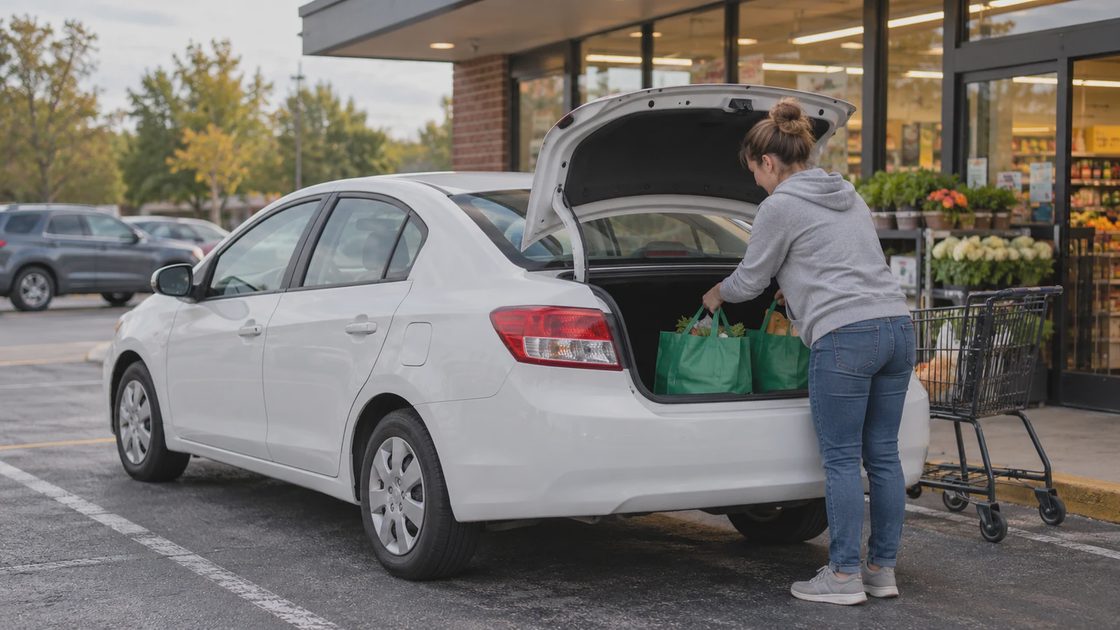
Test the trunk opening with the item that matters most to you. Try rear-seat access with regular passengers. You do not need an elaborate cargo experiment: the useful question is whether this small sedan handles your repeated weekly tasks without an inconvenient workaround.
Compare two complete starting budgets
An inexpensive car’s first expenses often arrive together. Make the comparison using the same categories for every candidate:
Cost category | Evidence to request |
|---|---|
Purchase and compulsory fees | Written out-the-door price, not a payment-only advertisement. |
Immediate mechanical work | Independent inspection and written estimate. |
Tires and battery | Condition assessment and replacement quote where needed. |
Insurance | Quote using the actual VIN and your coverage choices. |
Unresolved symptoms | Diagnosis before assigning a final purchase ceiling. |
Repair reserve | Money retained after the transaction and known work. |

A dealer’s preparation fee or a private seller’s recent service does not prove the car needs nothing. Ask what was done and obtain the paperwork. Cosmetic detailing can improve presentation without answering a mechanical question.
Read the maintenance history as a timeline
Arrange invoices by date and mileage, and match their identifying details to the car. Distinguish an oil change from a transmission service and a service from a replacement. “Maintained regularly” is useful only when enough detail supports it.
Use Nissan’s model-and-year manual portal to locate the correct maintenance information. The schedule for a different engine, transmission, or market is not a dependable substitute.
When records are incomplete, ask the inspector what can be assessed now and which uncertainty remains. Missing paperwork does not automatically condemn the car, but it also cannot be converted into evidence that the work occurred. Keep that uncertainty in the offer decision.
Use a repeatable fuel log after purchase
A dashboard average can be useful context, but a record of distance and fuel added makes a change easier to discuss. When refueling normally, save the receipt and record the odometer reading. Over a suitable sequence of comparable full refills, divide the distance traveled by the gallons added. Do not top off beyond the pump’s normal shutoff just to make a calculation look precise.
Keep short notes about route, unusual idling, weather, and changed tires or loads. One tank can reflect different operating conditions or refill variation; it should not become a diagnosis by itself. A longer consistent record is more useful than comparing an urban tank with a road-trip dashboard photo.
If consumption changes noticeably under comparable use, bring the log to a qualified shop with any other symptoms. Ask for assessment rather than assuming an additive, different fuel, or transmission service will solve it. The purpose is to document your actual ownership, not force the car to match its original highway rating.
Check the car’s life beyond fuel use
The condition of tires, brakes, suspension, and the body can dominate a modest fuel-economy difference. Ask about uneven wear, persistent vibration, water intrusion, and previous collision repairs. A clean title and a pleasant drive do not make an independent inspection redundant.
Also consider downtime. If this is your only way to get to work, identify a practical fallback before choosing an example with unresolved issues. A purchase that leaves no repair money and no alternative transport may be unaffordable even when the monthly fuel bill is low.
A newer Versa S should face the same evidence standard as an older sedan. Establish actual condition and any remaining warranty from the VIN and documents rather than assuming a recent model year guarantees coverage.
The inexpensive Versa worth buying
Choose the car whose transmission, usable equipment, inspection findings, and starting budget fit your routine. Let MPG refine that comparison after you identify the right configuration.
Before the next viewing, request the VIN, transmission type, out-the-door price, and service invoices. Those four items make a used Nissan Versa search more useful than sorting every advertisement by its smallest price or largest highway number.