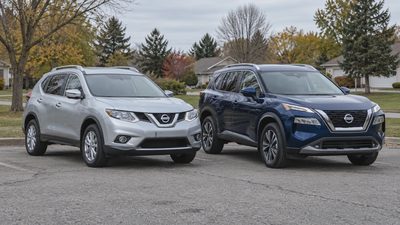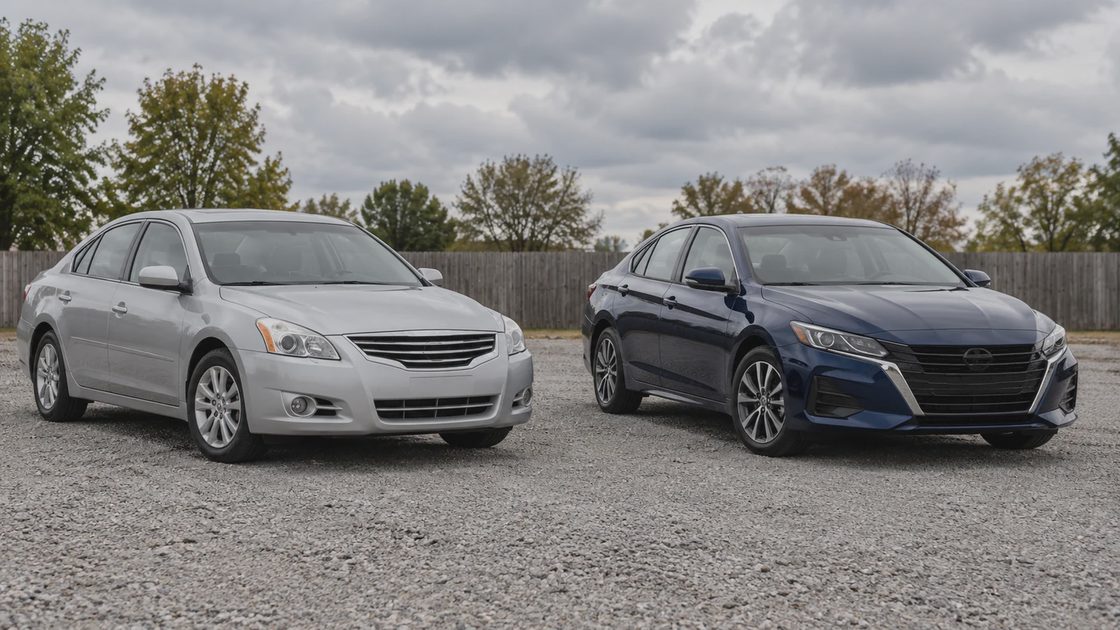
A 2018 Nissan Altima and a 2019 Nissan Altima can look like adjacent steps on a used-car price ladder. They sit on opposite sides of a generation change. That changes the equipment and powertrain questions you should ask before deciding whether the newer listing deserves more money.
I have seen buyers treat a late 2018 and an early 2019 as nearly the same car because the prices are close. That comparison usually breaks down once you check the engine and drivetrain. Start by confirming what is actually in the car, not by assuming the newer year is automatically the better value. Look past the badge and the model-year number. Check the history and the specific configuration.
This guide covers the 2014, 2016, 2017, 2018, 2019, 2020, and 2022 model years in your search. Its purpose is to help you compare actual versions, not award a reliability trophy from the calendar. Start with a required-feature list, identify each candidate’s engine and drivetrain, and use the year notes below to uncover mismatches in the advertisement.
Use two shopping lanes
Nissan identifies 2013–2018 as one Altima generation, followed by the redesigned 2019 model. Its heritage summary establishes that boundary. The simplest shortlist therefore has two lanes: older-generation value and newer-generation features.
Do not decide between those lanes by appearance alone. A car with a replacement bumper, aftermarket wheels, or an upgraded screen may look different from its original factory specification. Verify the model year from the VIN and documents.
Candidate year | Your first comparison question |
|---|---|
2014 | Is the condition strong enough to justify buying an older example? |
2016 | Which refreshed trim and equipment package is actually present? |
2017 | Is the seller charging for appearance or for features you need? |
2018 | Does the final older-generation example beat a comparable newer car on total cost? |
2019 | Which engine and drivetrain came with this redesigned car? |
2020 | What distinguishes this individual example from a similar 2019 listing? |
2022 | Which advertised driver-assistance and phone features are fitted? |
2014: assess the baseline before the upgrade
A 2014 Nissan Altima belongs in the older-generation lane. Begin with everyday function: seat adjustment, air conditioning, window operation, lights, trunk release, and visibility. Faults in those systems may be less dramatic than a drivetrain concern, but several together can erase an apparent bargain.
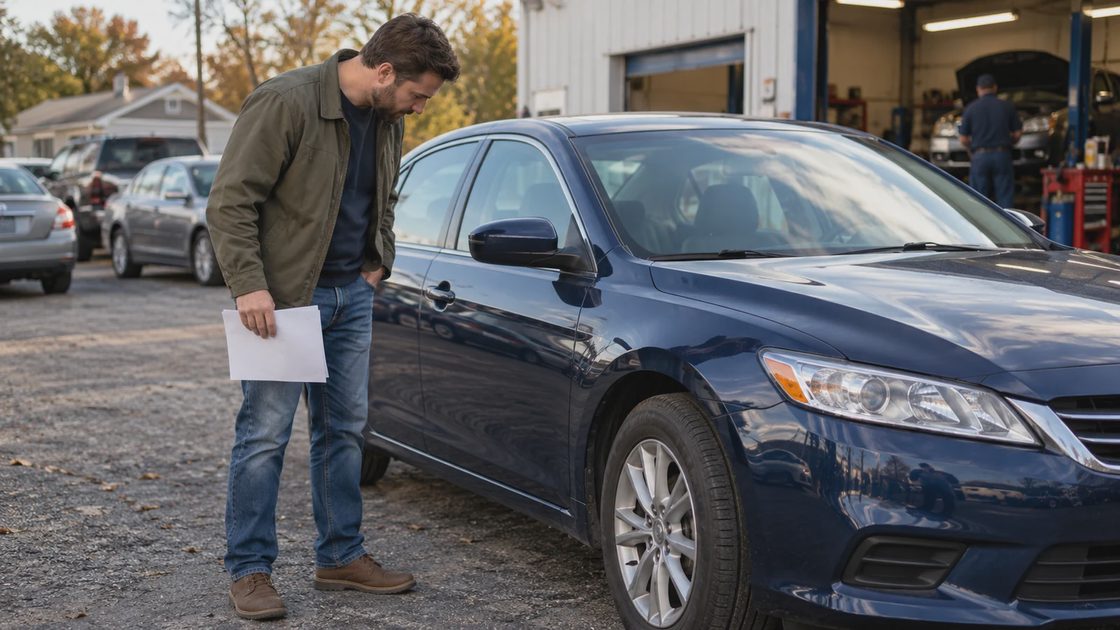
Have the mechanic assess leaks, tires, brakes, suspension, and transmission operation. Ask whether the car was already warm when you arrived; arrange a cold start if practical. A quick trip around the block leaves too many conditions unexplored.
A higher trim is not compensation for deferred work. Price the car against examples with comparable mileage, title history, and maintenance rather than against the cheapest listing on the results page. The useful question is what you will own after necessary repairs, not what the advertisement asks today.
2016 and 2017: decode the refresh and the badge
The 2016 Nissan Altima introduced a refreshed design and an SR grade. Nissan’s 2016 press kit also shows why equipment must be checked by trim: some driver-assistance features were standard on selected grades, while others required a package.
For a used buyer, that means two similar-looking cars can have meaningfully different equipment. Write down the feature you want, then verify it in the original specification and on the vehicle. A button or camera housing alone does not establish that the associated system operates correctly.

A 2017 Nissan Altima with appearance accessories should face the same comparison. Ask whether the wheels, lights, and trim are original. Larger replacement wheels can change the tire size and replacement cost, so get a quote for the tires actually fitted rather than the size shown in a generic model guide.
If two cars have similar records, I would pay for a feature I will use regularly before paying for a cosmetic package. That is a fit judgment, not evidence that one badge lasts longer.
2018: a generation’s final year is not a condition report
The 2018 Nissan Altima is often attractive to buyers who want the older design without going as far back in age. That is a reasonable search preference. It does not prove the car has fewer problems than every earlier example or every redesigned model.
Separate the age advantage from the evidence advantage. A later build date is observable; a claim that the previous owner “did everything” needs receipts. Compare the following before deciding that this is the value sweet spot:
Purchase price after compulsory fees.
Immediate tire, brake, battery, and fluid-related work identified by the shop.
Records of major drivetrain repairs or recurring symptoms.
Insurance quotes for the actual VIN.
The condition of equipment you would otherwise pay to add or repair.
A well-documented 2018 can deserve attention. A neglected one does not become a safer bet because it closes a generation.
A 2018 can be a reasonable choice when the service records are clear and the immediate repair needs are modest. It becomes a weaker choice when the seller is charging a final-year premium for a car with missing maintenance history, unresolved transmission symptoms, or tires and brakes that already need replacement. In those cases, the newer model year on the listing does not improve the ownership outlook. Compare the total cost of ownership, not just the asking price.
2019: the engine and drivetrain become the central fork
The redesigned 2019 Nissan Altima introduced available all-wheel drive and a separate 2.0-liter VC-Turbo engine choice. Nissan’s 2019 specifications distinguish the combinations: the turbo option is front-wheel drive, while all-wheel drive pairs with the 2.5-liter engine.
That makes an advertisement implying “AWD turbo” a reason to verify the listing rather than assume a rare configuration. Ask for the original window sticker or manufacturer equipment record and have the inspector confirm the vehicle’s identity.
For certain 2019–2020 VC-Turbo cars, NHTSA campaign 25V437 adds an engine-bearing recall check. Confirm current applicability and remedy status by VIN with Nissan. Do not extend that campaign description to every 2.5-liter Altima.
2020: pay for the car’s evidence
A 2020 Nissan Altima sits in the same broad redesigned generation. Compare it with a similar 2019 using engine, drivetrain, mileage, history, and condition. The newer number on the listing is only one input.
A replacement engine or transmission calls for more detail, not automatic rejection or automatic reassurance. Ask what was installed, why, at what mileage, and under which warranty. Then have the inspector assess current operation and the surrounding systems.
If the 2020 costs more but has no clearer history or needed equipment, ask what you are purchasing with the difference. Sometimes the answer is lower mileage or a feature you value. Sometimes the evidence supports choosing the older car instead.
2022: make the equipment list prove itself
Nissan’s 2022 U.S. press kit describes multiple grades and available technology. “Available” does not mean installed on every 2022 Nissan Altima.
Before paying for phone integration, plug in your compatible phone while parked and follow the vehicle’s instructions. Check the charging connection, audio, calls, and navigation display you intend to use. Do not assume an older connected service or subscription remains active simply because its original brochure listed it.
Driver assistance needs the same care. Review warning indicators and ask about windshield or collision repairs that may have involved sensors. Have a qualified shop investigate warnings; do not test emergency braking by creating an obstacle.
Compare the out-the-door cars
Hypothetical comparison: Car A costs $10,000 and needs $1,600 of immediate work. Car B costs $11,200 and needs $400. Assume equal taxes and fees, and no additional defects for this illustration.
Budget item | Car A | Car B |
|---|---|---|
Purchase price | $10,000 | $11,200 |
Immediate work | $1,600 | $400 |
Starting total | $11,600 | $11,600 |
The table above only shows purchase price plus immediate work. In practice, also account for insurance quotes on the actual VIN, the cost of tires if the current size differs from the original specification, and a reserve for items the inspection may still uncover. A lower asking price can disappear once these costs are included. If one car has unresolved drivetrain symptoms, do not enter that unknown cost as zero when you compare the two.
These assumed amounts are not market values or repair quotes. They show why the sticker-price gap can disappear. Replace them with written estimates and include a reserve. If one car has unresolved drivetrain symptoms, its unknown cost cannot honestly be entered as zero.
Use a feature ledger to settle a close comparison
For each candidate, give required equipment one of three statuses: confirmed working, fitted but needs attention, or absent. Leave an unverified feature unverified. This prevents a long advertisement from receiving more credit than a shorter, more accurate one.
For example, if heated seats matter to your commute, operate both seats while parked and allow time to notice their behavior. If phone integration matters, test the connection with your phone. Ask the inspector to investigate a function that behaves intermittently rather than treating one successful attempt as a complete assessment.
Keep comfort and mechanical confidence in separate columns. A quieter cabin might justify spending more for your use, but it does not cancel an unresolved drivetrain issue. Likewise, a mechanically promising car may still be unsuitable if the seat or trunk fails a daily requirement. A useful shortlist meets both standards instead of averaging them into a vague overall score.
Turn the year notes into a shortlist
Choose three candidates with the same must-have equipment, then request records before arranging inspections. Compare cars within a shopping lane first; cross the 2018–2019 boundary only when you can explain what the newer design adds for your needs.
The right year is the one attached to a car you can verify and afford to maintain. Send the seller your required-feature list and VIN request before booking a visit. That makes the next comparison more useful than another hour sorting listings by model year.
Walk away if you cannot confirm the engine and drivetrain, if the service history does not match how the car was described, or if the features you need are not actually present and working. The right year is the one attached to a car you can verify and afford to maintain. Send the seller your required-feature list and VIN request before booking a visit. That makes the next comparison more useful than another hour sorting listings by model year.