s Nissan Pathfinder a good car for a family? It can be, if you choose the generation and configuration around the passengers, cargo, and trailer you actually carry. Pathfinder changed substantially over time, so a blanket answer to “Are Nissan Pathfinders reliable?” hides useful distinctions.
A 2013 Nissan Pathfinder and a 2022 Nissan Pathfinder need different transmission and equipment questions. A vehicle that seats everyone on paper may still fail your luggage or access test. I would establish the family’s daily requirements first, identify the generation second, and use records and an inspection to evaluate the particular SUV rather than buying its reputation.
Begin with every seat you intend to use
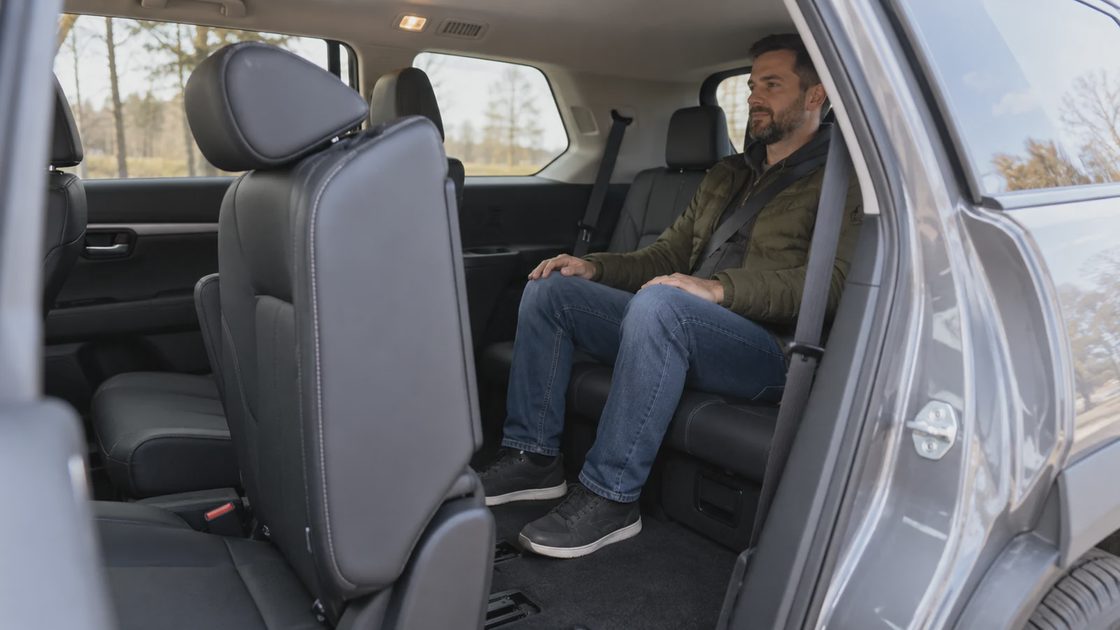
Set the front seats normally and put your regular passengers in their actual positions. Check entry, exit, headroom, knee room, and whether reaching the third row requires an arrangement your family can repeat comfortably.
Bring the child restraints you plan to use and consult the exact vehicle and restraint instructions. Seat count does not tell you whether a particular combination fits or where each restraint can be installed. Do not assume a demonstration with an empty seat establishes a safe installation with a child aboard.
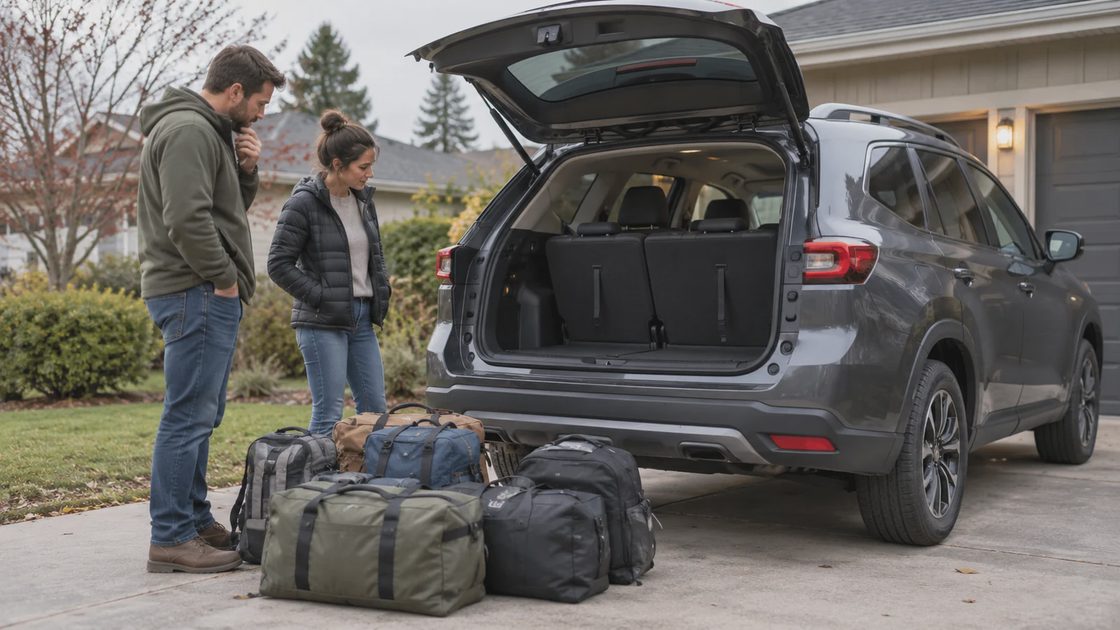
Now load the items you carry when those seats are occupied. A folded third row creates space by removing passenger positions; it cannot solve a trip that requires both the passengers and the luggage.
The useful capacity question is: “Can this exact seating arrangement carry our regular people and cargo together?”
If the answer is unclear, postpone the trim discussion. Heated seats and a premium audio system cannot create a missing seating or cargo solution.
Put the model years into three practical groups
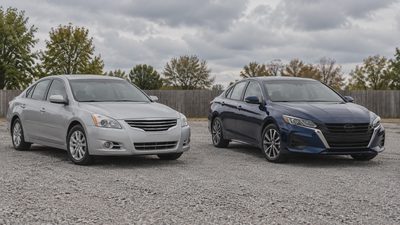
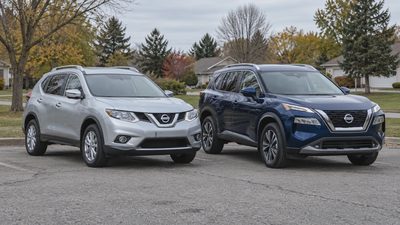
Nissan’s 2013 launch documentation marks the move to a unibody family crossover with a CVT. Its 2022 specification establishes the later redesign and nine-speed automatic.
Shopping group | What changes your comparison |
|---|---|
Earlier body-on-frame vehicles | Treat as a different age, layout, and mechanical proposition; inspect accordingly. |
2013–2020 crossover generation | CVT history, family fit, and year-specific equipment deserve attention. |
Redesigned 2022 generation | Different automatic transmission and interior arrangement; verify packages and condition afresh. |
The distinction helps decode a Nissan Pathfinder listing; “Nissan SUV” alone says little about the hardware. It is not a reliability ranking. Newer engineering can change the questions without proving how a specific used vehicle will behave.
2013 and 2014: investigate the history behind a smooth drive
The 2013 Nissan Pathfinder introduced the crossover layout. A brief drive that feels comfortable should lead to the next investigation, not end it. Ask for dated service invoices and records of any transmission complaints or repairs.
For a 2014 Nissan Pathfinder, confirm whether you are looking at a conventional V6 or a hybrid. Nissan’s 2014 material treats the hybrid separately. Do not apply the ordinary V6 description to a hybrid or assume a shop can evaluate both with the same inspection plan.
If a transmission was replaced, ask what was installed and why. An invoice identifying the unit, mileage, and warranty terms is more informative than “gearbox done.” A replacement can clarify the history while still leaving the need to assess current operation.
2016 and 2019: avoid mistaking simulated shifts for a different transmission
Nissan’s 2016 press kit describes D-Step logic that simulates shifts within the Xtronic system. The sensation of stepped acceleration does not make a 2016 Nissan Pathfinder a conventional fixed-gear automatic.
The 2019 specification also identifies Xtronic. For a 2019 Nissan Pathfinder, compare fitted driver assistance, seat arrangement, and condition instead of assuming a later date alone resolves every mechanical concern.
Have a qualified shop investigate delayed engagement, shuddering, unusual noise, or inconsistent acceleration. Describe when the symptom occurs and whether the car is cold or warm. Those observations help diagnosis; they do not identify the failed part by themselves.
What a historical CVT extension can establish
A Nissan bulletin dated June 1, 2022 lists specified 2015–2018 Pathfinder vehicles in a CVT warranty extension. That is a documented program for a stated population, not a blanket promise for every Pathfinder or a calculation of failure rates.
Ask Nissan to check the VIN, original in-service date, mileage, and applicable terms. A seller’s mention of “extended warranty” might refer to a historical manufacturer program or a separate service contract. Obtain the actual document and confirm what remains available today.
Warranty status does not replace an inspection. A vehicle outside coverage can still be a reasonable purchase when its condition and price work; one with remaining coverage can still have costs or inconvenience the buyer cannot accept.
2022: assess the new layout on its own merits
The 2022 Nissan Pathfinder uses a nine-speed automatic rather than the preceding generation’s CVT. That matters when choosing inspection questions and interpreting invoices. It does not support a promise that all transmission problems disappeared.
Try the actual second-row configuration and the route to the third row. Check the equipment you will use while parked, including seat mechanisms, climate controls, power outlets, phone connectivity, and cameras if fitted. An original brochure’s “available” feature is not proof that the listing includes it.
Ask about collision and windshield repairs that may have involved assistance-system components. Warning lights or inconsistent functions deserve qualified investigation; do not create a collision scenario to test emergency braking.
Make towing a separate family calculation
A brochure maximum is not the capacity of every combination. For example, Nissan’s 2022 specification distinguishes a standard 3,500-pound towing capacity from an available 6,000-pound maximum when properly equipped. Confirm the candidate’s exact configuration before planning a trailer purchase.
Passengers, luggage, accessories, and trailer tongue load also consume the vehicle’s carrying allowance. A family filling all rows may have a different towing constraint from a solo driver in the same model.
Write down the loaded trailer weight, measured tongue load, occupants, and cargo. Check the vehicle, axle, combined, hitch, and trailer limits with the appropriate manual and qualified help. Being able to pull a trailer away from a parking space does not establish a suitable towing setup.
Check the family equipment from the seats that use it
Front-seat controls can conceal a rear-passenger problem. With the vehicle parked, check rear ventilation, seat releases, door locks, power outlets, and any entertainment equipment from the relevant rows. A front climate display lighting up does not establish airflow or useful control for everyone behind it.
Ask each regular passenger to complete the entry-and-exit sequence without the seller rearranging the vehicle for them. If the routine requires sliding a seat, make sure the mechanism operates consistently and the final position works for the person sitting there. Report binding, damage, or an uncertain latch to the inspector rather than forcing the mechanism.
Keep the trial realistic but stationary. Secure passengers and cargo correctly before any road test, and follow the restraint instructions instead of inventing a shortcut to improve access. A convenient demonstration is not a substitute for the vehicle’s operating limits.
Finally, divide equipment into essential and optional functions. A failed rear climate function may be a purchase-stopping issue in your climate, while an obsolete entertainment screen may not matter if you never intend to use it. Obtain a repair estimate for the functions you require. This gives a higher trim a concrete value and prevents several broken premium features from being counted as advantages merely because they appear on an advertisement.
Decide which uncertainty you can afford
Compare purchase price plus transaction costs, required repairs, insurance, and a reserve. Keep unresolved faults visible instead of assuming they will be inexpensive. Ask the inspector to distinguish work needed now from upcoming wear and problems needing more diagnosis.
The family’s fallback transport matters too. If the SUV is essential every weekday, include the practical cost of losing access during a repair. A cheaper purchase can be the wrong choice when it consumes every reserve and leaves no workable alternative.
A useful shortlist contains vehicles that pass the seating-and-cargo trial before the mechanical inspection. That order keeps you from spending inspection money on an SUV that cannot complete the family trip.
Take the family requirements to the vehicle
Choose the Pathfinder generation that solves your actual seating and use problem, then require the records and inspection to justify the individual example. Ask for the VIN and the exact second-row configuration before arranging the next visit.
Bring the people and cargo that matter. The right used family SUV should earn its place through that practical trial and a clear ownership plan, not through the number of seats printed in an advertisement.