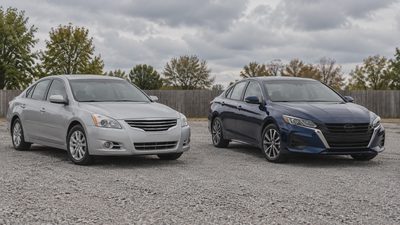
My starting shortlist is a well-documented 2019–2020 non-hybrid Rogue, or a verified 2.5L 2021 Rogue if you want the redesigned cabin. For Nissan Rogue years to avoid, I would be most cautious with older examples that have unresolved CVT concerns and VC-Turbo vehicles whose recall work or engine condition is unclear. These are buying priorities, not measured failure-rate rankings or guarantees about every vehicle from those years.
Are Nissan Rogues reliable? Some can be practical family purchases. The year narrows the research; the engine, repair history, and inspection decide whether a specific car belongs on your driveway.
Start with this year-and-engine map
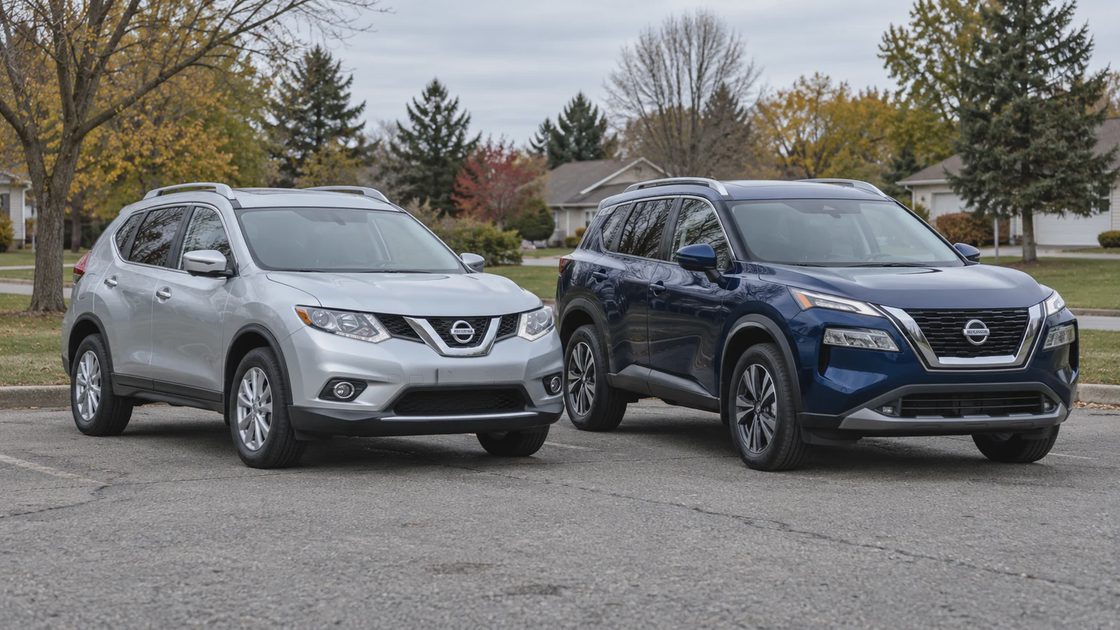
The main U.S. Rogue and the smaller Rogue Sport need separate research. Also check whether a 2014–2015 listing says Rogue Select: Nissan continued the earlier design alongside the redesigned Rogue. Its 2014 Rogue Select press kit confirms the distinction.
Model years / version | My shopping position | Evidence needed before an offer |
|---|---|---|
2008–2013 Rogue; 2014–2015 Rogue Select | Budget-only consideration; investigate CVT behavior and age-related condition closely | Transmission diagnosis/history, corrosion inspection, and catch-up maintenance estimate |
2014–2018 Rogue, second generation | Higher scrutiny because of documented CVT warranty-extension history | Repair invoices, current transmission assessment, VIN-specific coverage check |
2019–2020 non-hybrid Rogue | Start here for an older, lower-complexity engine choice | Full service history and independent inspection; still a CVT vehicle |
2021 Rogue with verified 2.5L engine | Consider for the redesigned generation without the later mainstream turbo engine | Actual engine identification, recall status, and mechanical inspection |
2021–2025 Rogue with 1.5L VC-Turbo | Resolve applicable engine campaigns before comparing cosmetic equipment | VIN campaign status, completed-work invoices, engine evaluation, coverage terms |
2026 and newer | Too recent for a confident long-term used-reliability verdict | Current recalls, warranty terms, and emerging ownership evidence |
The best years for Nissan Rogue shoppers are therefore a shortlist with conditions. A recommendation to inspect a 2020 does not mean a neglected one outranks a carefully maintained alternative.
Why year rankings can disagree
Before accepting a “best” or “worst” label, check the method behind it. Complaint totals, warranty programs, and owner satisfaction answer different questions. A useful year comparison needs to account for:
Exposure: More vehicles sold and more years on the road create more opportunities for reports.
Severity: An annoying screen fault and a loss-of-power complaint have different consequences.
Configuration: A hybrid, conventional gasoline model, or different engine may need separate analysis.
I would use complaints to identify questions for the inspection, rather than convert a raw count into the probability that your car will fail. That distinction matters when a newly released year appears unusually trouble-free.
Which older Rogues deserve the most caution?
First-generation vehicles: investigate reduced performance
Nissan issued a technical bulletin for specified 2008–2010 Rogues for reduced performance associated with CVT fluid-temperature protection. A separate bulletin addresses specified 2011–2013 Rogues and 2014–2015 Rogue Selects. Both specify vehicles without the tow-package kit. These documents identify a condition for technicians to investigate, not a failure percentage for every car.
For an older candidate, ask whether it has lost speed or power after extended driving, particularly in hot conditions. Have a qualified shop assess any history of that behavior. A brief drive around the seller’s block cannot establish how the transmission behaves over a longer trip.
I would skip an inexpensive example if the seller describes unexplained reduced performance as normal. The attractive price would not resolve the diagnosis or the risk of being stranded.
2014–2018: the CVT paperwork matters
Nissan’s Rogue CVT warranty-extension bulletin includes 2014–2018 Rogue T32 vehicles and specified 2015 Rogue Select vehicles. It extended specified CVT coverage to 84 months or 84,000 miles, whichever came first. It was a warranty extension, not a safety recall.
That historical program is a reason for extra scrutiny. It is not proof that every transmission failed, nor a promise that a car offered today remains covered.
Ask for the diagnosis, replacement mileage, parts description, and written coverage on any claimed repair. “New transmission” could describe different work; an invoice should explain what actually happened. A replacement also does not erase the vehicle’s remaining maintenance needs.
The newer-Rogue issue is the engine, not just the year
The 2021 redesign and the later engine change are separate events. Nissan’s 2021 launch specifications describe the standard 2.5L four-cylinder. Its 2022 announcement introduced the 1.5L three-cylinder VC-Turbo across the lineup.
Here is why I would verify the actual car rather than stop at that summary:
Recall 25V437 identifies certain 2021–2024 Rogues with the affected VC-Turbo engine population. A 2021 model-year label alone does not settle applicability.
Recall 26V080 covers certain 2023–2025 Rogues with the 1.5L VC-Turbo and concerns oil-temperature-related bearing damage that can lead to engine failure.
Neither campaign means every Rogue in its listed year range has the defect. Eligibility is specific to affected vehicles.
The 25V437 filing and 26V080 acknowledgment provide the engine and campaign scope. These examples are not an exhaustive recall list.
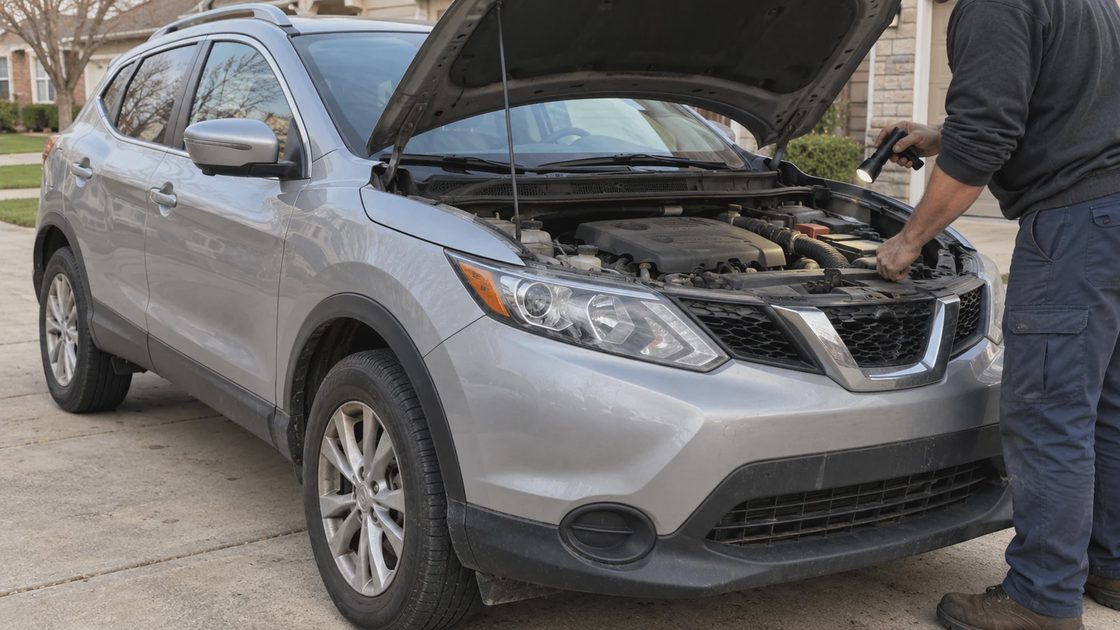
Before buying a turbo-equipped candidate, request a dealer’s VIN campaign check and the actual repair orders. Ask what was inspected, programmed, or replaced, and whether any further work remains. A seller saying “the recall was done” is less useful than a dated invoice identifying the campaign.
Completed recall work is important evidence. It is not a guarantee against every future engine problem.
I postpone the purchase if there is abnormal engine noise, rough running, a warning light, or uncertain campaign status. Those observations need professional diagnosis; they do not establish a particular failure by themselves.
Why my shortlist starts with 2019–2020 and selected 2021 cars
For me, the best year for Nissan Rogue buyers to investigate first is 2020, provided the individual car passes inspection. Nissan’s 2020 brochure lists the 2.5L four-cylinder and Xtronic CVT. I would also compare documented 2019 non-hybrid examples; do not apply this engine-based reasoning automatically to a Rogue Hybrid.
My preference is about narrowing the powertrain questions. These candidates avoid the specific VC-Turbo engine issue discussed above, but retain CVT and ordinary used-car risks. Being outside one warranty program or recall does not prove superior durability.
A verified 2.5L 2021 is another reasonable comparison if you value the newer cabin. Its redesign does not independently establish reliability, and I would not pay a large premium merely because it looks newer.
If a maintained 2018 and a poorly documented 2020 are the only local choices, I would investigate the 2018’s repair evidence before assuming the later year wins. The shortlist organizes your shopping; it does not replace the inspection.
Separate ownership fit from Nissan Rogue reviews
Nissan Rogue reviews can help you judge the cabin, controls, ride, and practicality of a particular generation. A favorable road test when new cannot establish the current condition of a used transmission or engine.
Is the Nissan Rogue a good car for your household? Check the parts of daily life a reliability table cannot answer:
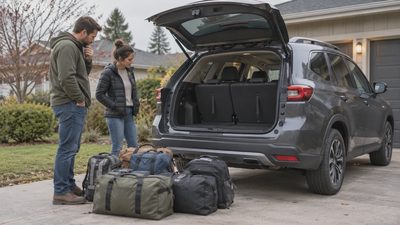
Fit your regular stroller, groceries, or work equipment with the rear seats in their normal position.
Check rear-seat access and seating comfort with the people who will use the car.
Operate the air conditioning, liftgate, cameras, and phone connection on the exact vehicle.
Compare insurance quotes and a written estimate for identified maintenance before stretching the budget.
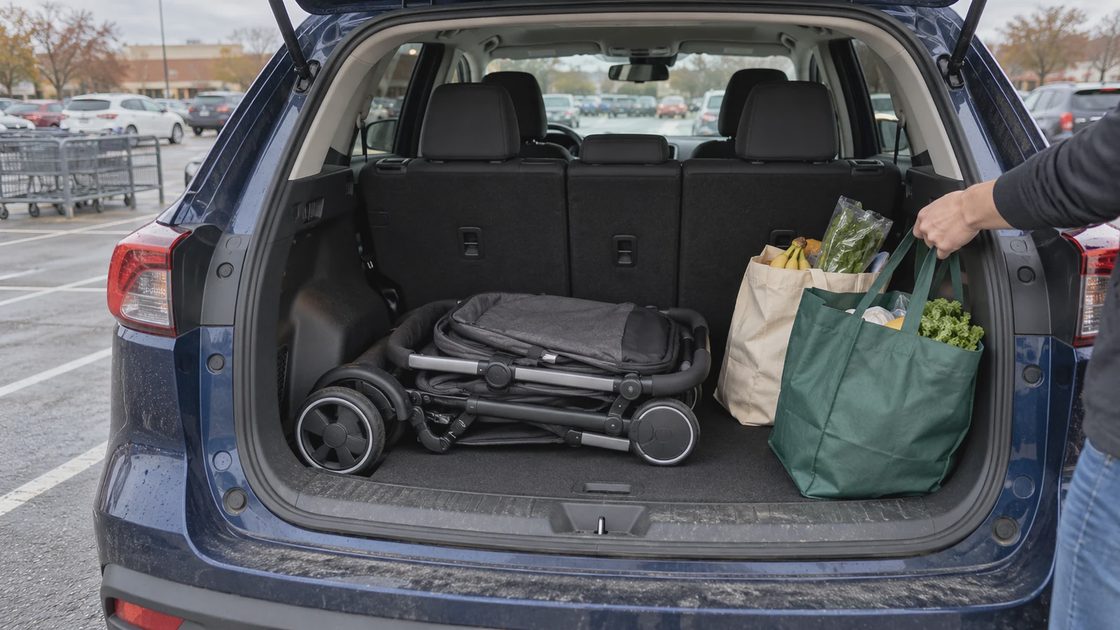
I accept fewer trim features to keep money available for necessary work. Paying extra for equipment you barely use makes less sense if it leaves an unresolved mechanical concern unaffordable.
Turn a year recommendation into a buying decision
Is Nissan Rogue reliable enough for your commute? Establish that through the candidate’s evidence rather than its place on a list. For Nissan Rogue problems mentioned by the seller, write down the symptom, the diagnosis, and the supporting invoice as separate items.
Before a deposit, complete these four checks:
Identify: VIN, model year, Rogue versus Select or Sport, engine, and drivetrain.
Verify: Run the NHTSA VIN recall lookup and ask a dealer about other applicable campaigns. The lookup has exclusions and is not a full service history.
Inspect: Arrange an independent examination covering the candidate’s transmission, engine, condition, and reported symptoms.
Decide: Compare the asking price plus identified work with another inspected vehicle. If unresolved questions could change affordability, postpone the offer rather than assume a cheap fix.
My practical answer on Nissan Rogue years to avoid is to avoid unexplained symptoms and unsupported repair claims, with additional scrutiny for the year-and-engine groups above. Send the seller one message now: “Please share the VIN, engine specification, and invoices for any transmission, engine, or recall work.”