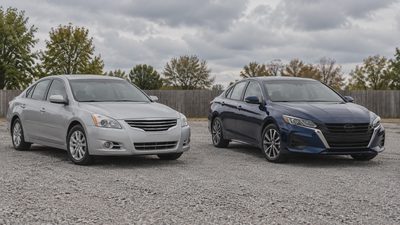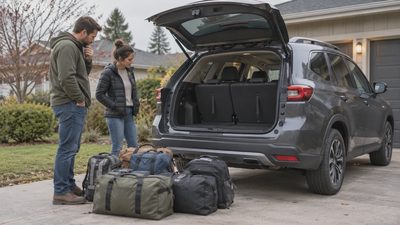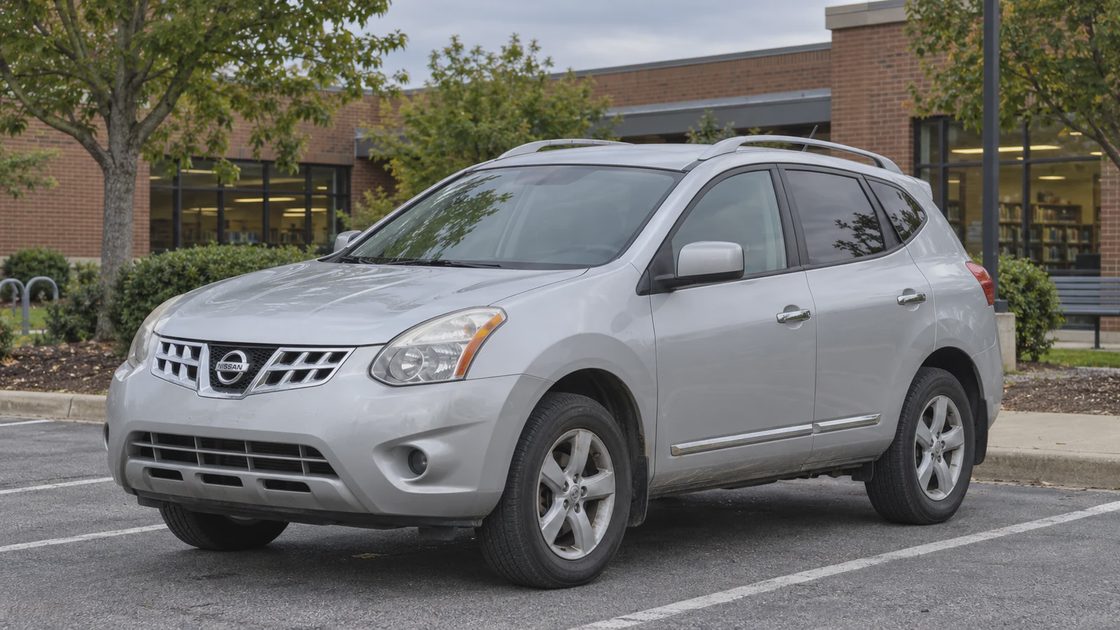
A 2013 Nissan Rogue belongs to the earlier generation; a 2014 listing can describe either the redesigned Rogue or the older Rogue Select. The same naming trap continues into 2015. Before comparing prices, match the VIN, model name, photographs, and actual seating configuration so you are comparing equivalent vehicles.
My priority in this age range is to establish what the car actually is. A newer registration year, an impressive trim badge, or a seller’s description cannot resolve a generation mismatch. Once the identity is clear, condition and repair records matter more than finding the newest year you can afford.
The 2014 change created two different shopping paths
Nissan redesigned the main Rogue for 2014 while continuing the earlier vehicle as the Rogue Select. Its official Select press kit explains that arrangement. Select was a separate continuation of the old model, not an equipment package on the new one.
That distinction changes your research:
2010–2013 Rogue: Earlier-generation vehicle, commonly identified by the S35 model code in technical documents.
2014–2015 Rogue Select: Continuation of that earlier S35 design.
2014–2015 Rogue without Select: Redesigned T32 generation, with a different cabin and packaging.
The year overlap means a search for a 2014 Nissan Rogue can return vehicles with substantially different interiors. Parts lookup, service information, and optional equipment must follow the actual model. I would ask the seller to correct a vague listing before scheduling a long trip to view it.
What changed from 2010 to 2013?
These years do not represent four successive redesigns. The buying differences are mostly about appearance, trim organization, and equipment, alongside the condition of each surviving example.
2010: establish what the equipment actually does
The 2010 Nissan Rogue specifications describe a 2.5-liter four-cylinder with an Xtronic continuously variable transmission, or CVT. That is a useful starting point for identifying the powertrain, not evidence that a particular transmission remains healthy.
If you are comparing a 2010 Nissan Rogue with a later car, test the equipment rather than assigning value from its original option list. Check the air conditioning, locks, windows, audio connections, and both supplied keys. An older premium audio system may matter less to you than working climate controls and supported maintenance.
2011–2012: equipment labels changed
Nissan’s 2011 update revised styling, trim names, and available features. The S and SV structure and option packages mean that matching a trim label across different years is not enough to establish identical equipment.
A 2011 Nissan Rogue crossover advertised with navigation or a camera deserves a demonstration of those features. Verify that the camera gives a usable image and that your phone can connect in the way you need. Do not assume that the presence of Bluetooth means every modern audio function is supported.
For a 2012 example, apply the same discipline: inspect the actual package and operation. A feature that once justified a higher sticker price may add little value if it is outdated or malfunctioning.
2013: later equipment, earlier generation
The 2013 Nissan Rogue crossover is still the older design. Nissan’s 2013 press kit describes available technology including Around View Monitor. Availability does not mean every trim has it, and the vehicle is not the redesigned 2014 cabin merely because the years are adjacent.
I would compare a documented 2013 with a Select on condition and usable equipment, rather than assume the Select is a major mechanical upgrade because its model year is later.
Shared engine descriptions do not make the cars interchangeable
An advertisement describing a 2.5-liter engine and CVT can fit both sides of this generation change. That broad description does not identify the cabin, seating package, or correct model-specific repair information. I would keep the complete vehicle description attached to every estimate rather than ask a shop to price work for an unspecified “2014 Rogue.”
This is especially useful when the seller has collected receipts from several years. Look for the VIN and mileage on each document, then ask the shop that issued it to clarify a vague entry if the owner can arrange that. A shorthand model name is not automatically evidence of an incorrect repair; it is a reason to verify the work before relying on it.
The same principle applies to replacement parts and accessories. Confirm fitment against the actual vehicle rather than using a nearby year as a shortcut. Saving a little time during research is not useful if the quote or equipment comparison belongs to a different version.
What the redesigned 2014–2015 Rogue adds
The redesigned model deserves a separate viewing if cabin flexibility is your main reason for buying. Nissan offered optional third-row seating on the 2014 Rogue, while the earlier Select was a five-seat vehicle.
For the 2015 Rogue, Nissan also documented a sliding second row and available third-row packages. The important used-buying question is whether the individual car has the layout you need and whether it works for your passengers.
Your requirement | What to establish on the actual car |
|---|---|
Occasional extra seating | Confirm that the optional seats and their original restraints are actually present |
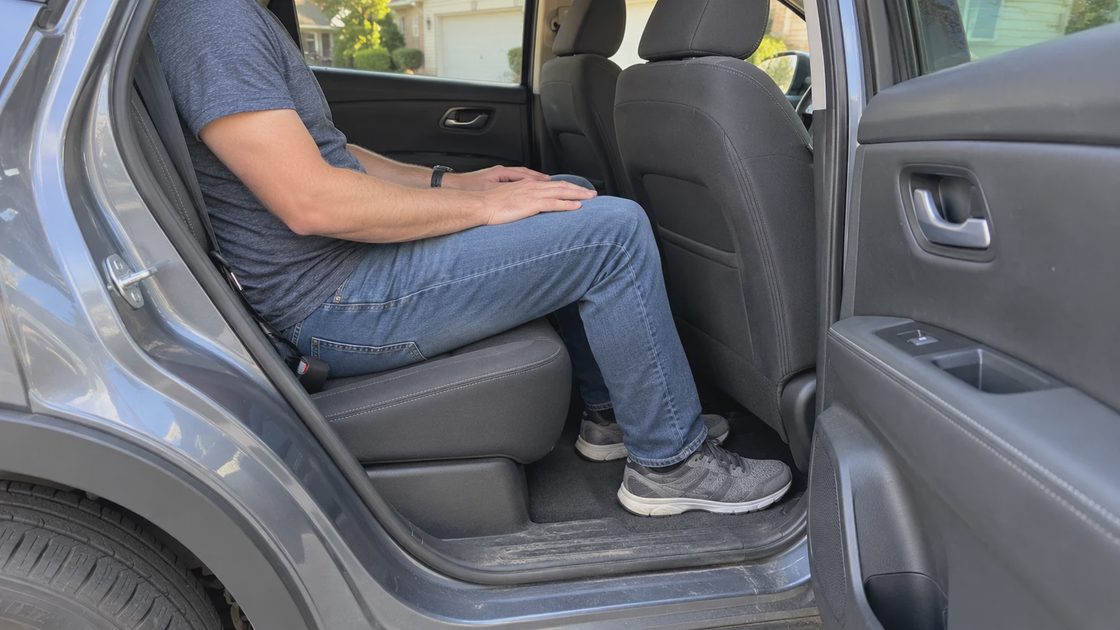
Regular rear passengers | Sit behind the driver with the front seat in its normal position |
Large weekly grocery load | Check usable space with the seats arranged as you will travel |
Flexible second row | Operate the slide, recline, and folding functions; check that seats latch properly |
Camera or driver-assistance feature | Identify the fitted package and demonstrate operation |
Do not buy a small optional third row from the passenger count alone. Try the actual space with the intended passengers, and consult the owner’s manual for seating and restraint use. Regular seven-person transport may call for a different vehicle altogether.
A seating option is useful only when the people and cargo you carry can use it comfortably.
Three checks to make before you trust the listing
Suppose a seller advertises “Nissan Rogue 2015” with an upgraded trim and extra seats, but the photographs appear to show the older body. I would treat that as an identification question first. The ad could be inaccurate; it does not establish which version is being sold.
First, match the vehicle identification number. Request the VIN, then compare the number on the vehicle with the paperwork. Use NHTSA’s recall lookup for applicable unrepaired safety recalls, remembering that its results have exclusions and do not form a full service history.

Next, verify model and equipment. Ask for clear exterior, dashboard, and rear-seat photographs. Have a Nissan dealer or qualified shop resolve any uncertainty about generation or configuration before ordering parts or assessing model-specific concerns.
Finally, compare the records with that identity. Confirm that repair invoices belong to this VIN and describe the correct vehicle. An invoice from another car or a generic service entry cannot support a claim about this transmission or seating configuration.
Carry the right mechanical questions into the inspection
Nissan published separate CVT temperature-protection bulletins for specified 2008–2010 Rogue vehicles and 2011–2013 Rogue / 2014–2015 Select vehicles, without the tow-package kit. These describe conditions a qualified technician should evaluate; they are not instructions to diagnose every older Rogue from a short drive.
Tell the inspecting shop about any history of reduced performance after extended driving, unusual noise, or previous transmission work. Ask the seller what prompted a repair and request the completed invoice. A recent fluid service alone does not establish the condition of internal components.
The separate CVT warranty-extension document includes specified T32 Rogues and 2015 Selects. It is a historical program with time, mileage, and eligibility limits—not a reason to assume coverage remains available today.
On cars this old, I would also request a written assessment of corrosion, leaks, suspension wear, tires, brakes, and deferred maintenance. A model-specific concern should not distract from an ordinary repair backlog that changes affordability.
Choose the version before choosing the deal
My preference depends on the job:
Simple five-seat transportation: Compare earlier Rogues and Selects with supported records; do not pay a redesign premium for a Select nameplate.
Cabin flexibility: Inspect the redesigned 2014–2015 Rogue and verify the fitted seating package.
Regular additional passengers: Test the actual third row before making it your reason to buy; consider a larger vehicle if it does not fit.
A well-kept older-generation car can deserve more attention than a newer-looking example with unanswered mechanical questions. Before your next viewing, ask the seller to confirm one complete description: model year, Rogue or Rogue Select, VIN, drivetrain, and number of fitted seats. That gives every later comparison a sound starting point.