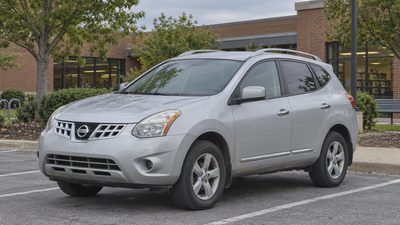
Are Nissan Altimas good cars? They can be sensible used sedans when the exact powertrain, service history, and purchase price support the decision. A comfortable test drive alone cannot establish Nissan Altima reliability, and a bad experience with one generation does not describe every Altima built.
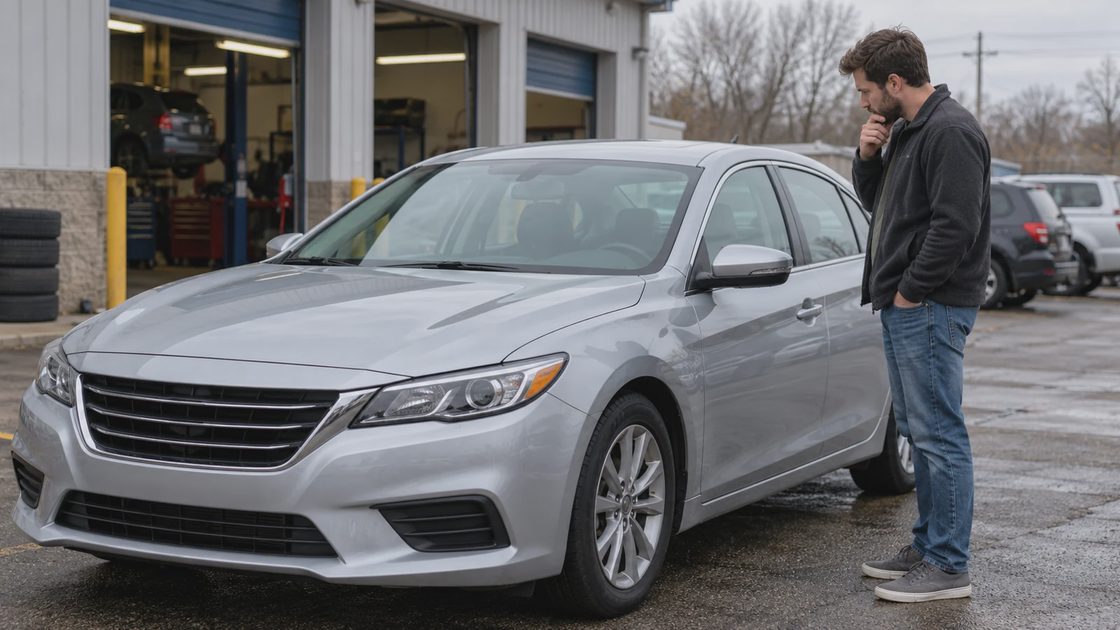
If you are asking, “Is Nissan Altima a good car for my commute?” start with your repair tolerance. A buyer who can absorb downtime has different choices from someone who needs the car for tomorrow’s shift. I would use year ranges to narrow the search, then let the individual car earn its place through records and an independent inspection.
Separate three questions before choosing a year
“Good car” can mean pleasant to drive, economical to own, or unlikely to interrupt your week. Those qualities overlap, but one does not prove another. A smooth, well-equipped sedan can still carry expensive unresolved mechanical uncertainty.
Ask these questions in order:
Does the car fit the job? Check seating comfort, rear-seat access, trunk opening, visibility, and your actual parking space.
Can its condition be established? Look for dated invoices, an inspection, and an explained repair history.
Does the price leave room for ownership? Include immediate work and a reserve instead of spending everything on the purchase.
This sequence prevents an attractive trim or a persuasive seller from deciding the reliability question for you. It also gives you a reason to reject a particular car without declaring the entire model defective.
The year changes that actually alter your search
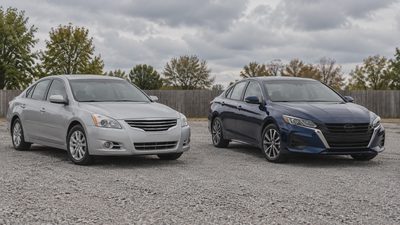
These are U.S. generation boundaries and shopping distinctions, not a statistical ranking of failure rates. Nissan’s Altima heritage overview documents the major transitions.
Years | What changes your buying approach |
|---|---|
2002–2006 | Older generation; age, corrosion, and the specific transmission matter more than modern Altima assumptions. |
2007–2012 | New generation introduced the Xtronic CVT; confirm the actual transmission and distinguish sedan, coupe, and hybrid. |
2013–2018 | Another generation; compare maintenance and equipment instead of treating a later badge as proof of durability. |
2019–2022 | Redesigned range with different engine and drivetrain choices; identify the engine before discussing recalls or ownership risk. |
A later model can offer equipment you need while carrying a higher purchase price. An older example can have a clearer repair history while facing more age-related work. Neither statement establishes a universal best year.
When people ask, “Are Nissan Altimas reliable?” my useful answer is therefore conditional: narrow the generation, identify the drivetrain, and assess what evidence remains missing. A year list cannot inspect the car parked in front of you.
Read complaint totals without turning them into odds
A complaint page can point you toward a symptom worth investigating. Its raw total does not tell you the probability that your next car will fail. To make that inference, you would need useful exposure information: how many comparable cars were driven, for how long, under what conditions, and how reports were collected.
Two year groups can also have had different time to accumulate mileage. A newer car’s smaller complaint total may partly reflect its shorter history. That does not make the reports useless; it changes the question you can responsibly ask of them.
Use a recurring report to brief the inspector: “Please assess this symptom and explain what you observe on this car.” Avoid converting an unnormalized count into a made-up failure percentage or a promise that a quiet year is trouble-free. Your decision improves when each source does a job it can actually support.
Transmission history deserves its own evidence folder
A continuously variable transmission changes its operating ratio without the fixed gear changes of a conventional automatic. Its behavior can feel unfamiliar, so an engine holding steady revs during acceleration is not, by itself, a diagnosis.
The buying question is whether the car behaves consistently and whether the paperwork explains its maintenance or replacement. Request the invoice for any claimed transmission work. A description such as “new transmission” might refer to a replacement unit, a control repair, or an unverified seller recollection.
Check that the paperwork identifies:
The date and odometer reading when work occurred.
The shop, repair description, and installed part or assembly.
Fluid specification where recorded, rather than a generic “transmission service.”
Any warranty terms, including whether they transfer to another owner.
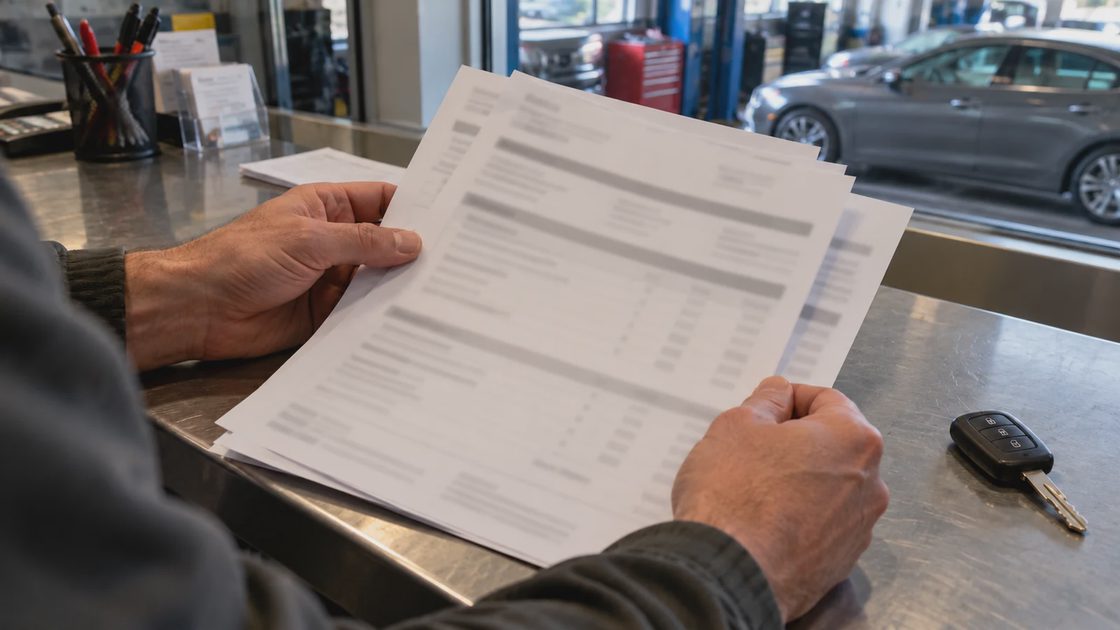
Have an independent shop investigate delayed engagement, shuddering, unusual noise, or inconsistent acceleration. Those symptoms can have different causes. An online description cannot price the repair accurately, and changing fluid should not be presented as a guaranteed cure.
Ask the inspector to assess the car after it reaches operating temperature as well as during initial operation. Do not arrange an aggressive test or deliberately provoke a fault on public roads. The goal is a reproducible observation a technician can evaluate.
Identify the engine before reading a recall headline
A significant distinction applies to certain 2019–2020 Altimas with the 2.0-liter VC-Turbo engine. NHTSA campaign 25V437 concerns engine-bearing defects in specified vehicles. That document does not label every Altima engine affected.
For a candidate car, obtain the VIN and check the current campaign status with Nissan. Ask for the repair order when a seller says recall work is complete. A completed recall and a clean inspection answer different questions; neither replaces the other.
A 2.5-liter listing should not inherit the turbo model’s description merely because both cars share a model year. Conversely, an appealing turbo price is not a reason to skip a campaign check. Engine identity belongs near the top of your comparison sheet.
Put Nissan Altima MPG into annual dollars
Fuel economy matters, but a few miles per gallon can distract from a much larger ownership difference. Match Nissan Altima MPG to the exact year, engine, drivetrain, and trim before comparing figures. A highway rating is not a promise for short urban trips.
Hypothetical example: assume 12,000 miles per year, gasoline at $3.50 per gallon, and two cars averaging 30 and 32 mpg in the same driving conditions.
Calculation | 30 mpg | 32 mpg |
|---|---|---|
Annual gallons: miles ÷ mpg | 400 | 375 |
Annual fuel cost | $1,400 | $1,312.50 |
The modeled difference is $87.50 per year. These are assumed averages and fuel prices, not measured Altima results. Different mileage or prices change the result. Still, the calculation explains why a documented repair need can matter more than a small advertised MPG advantage.
Use your real commute and local fuel price in the same formula. Then compare fuel cost with tires, insurance, financing, and any inspection findings. Economy is a whole-car decision.
Is the Nissan Altima discontinued?
Treat “Nissan Altima discontinued” as a dated, market-specific question. As checked on October 29, 2026, Nissan has an official U.S. 2026 Altima release. That establishes a 2026 U.S. offering; it does not establish every later production decision.
For a used buyer, model-line news should prompt practical questions rather than an automatic rejection. Ask local shops whether they service your specific engine and transmission, and obtain estimates for known work. Do not assume either unlimited future parts availability or an immediate parts shortage from a headline.
Give the seller five questions that require evidence
A buyer asking, “Is a Nissan Altima a good car?” needs answers tied to a particular VIN. Send these before traveling:
“Please send the VIN, engine and drivetrain details, dated service invoices, any transmission or engine repair orders, and confirmation that an independent inspection is welcome.”
Then clarify what ownership looked like. Was the car used for frequent short trips? Why is it being sold? Are warning lights or intermittent problems present? A seller’s explanation is useful context, but it remains a statement until the inspection or documents support it.

A refusal to permit inspection changes the decision more than a polished description. So does a mismatch between invoices and the car’s VIN or mileage. Pause the purchase when the evidence does not line up; a lower price does not make missing facts disappear.
A decision you can defend
I would shortlist an Altima when it fits the daily job, its powertrain is clearly identified, major repairs are documented, and the inspection leaves a manageable ownership budget. I would leave a tempting example behind when its condition depends on promises that cannot be checked.
Before choosing your next listing, make three columns: verified, needs inspection, and unanswered. Put every important claim in one of them. That small exercise turns a broad reliability debate into a decision about the actual car you may buy.