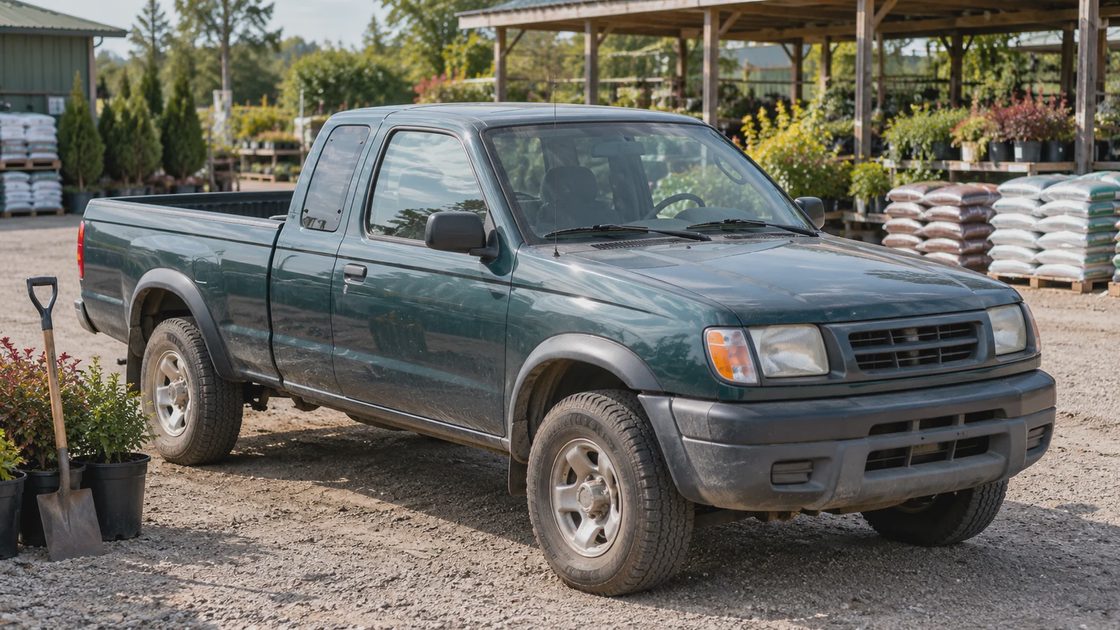
A 2000 Nissan Frontier can be a useful small work truck, but its purchase price is only the opening question. Before comparing it with a 2017 Nissan Frontier, decide whether you need occasional hauling, daily transport, four-wheel drive, or regular rear-seat use. Each job changes which compromises are acceptable.
For older Frontiers, I would separate structural condition, powertrain history, and usable configuration before negotiating. I separate those three before negotiating. I saw low-mileage Frontiers with severe frame corrosion that required more work than higher-mileage trucks with sound structure and documented repairs. That pattern changed how I weighted the purchase price. A low-mileage truck with serious corrosion can be less workable than a higher-mileage example with sound structure and documented repairs. This guide covers the older shopping range; it does not assign a failure probability to a model year or assume every truck had the same working life.
Start with the job that justifies owning a truck
Write down the largest item you carry, how often you carry it, and who normally travels with you. Measure the item, not just the bed’s advertised volume. A wheelbarrow, sheet material, bicycle, and camping box each create a different loading problem.
Then ask whether a truck is necessary every week. If hauling happens twice a year, compare the complete ownership cost with the transport alternatives actually available to you. That comparison may still favor a Frontier, but it prevents a cheap asking price from deciding the whole question.
Your regular job | What to inspect or try first |
|---|---|
Solo errands and occasional bulky loads | Bed access, cargo dimensions, tailgate, and tie-down condition. |
Commuting with passengers | Actual rear-seat access and comfort with the front seat set normally. |
Rough access roads | Correct drivetrain, tires, clearance, and evidence of damaging modifications. |
Trailer use | Exact vehicle ratings, equipment, and loaded weight; not a model-wide maximum. |
The 2005 boundary matters more than the badge
Nissan’s 2005 Frontier launch material describes an all-new, larger truck. A 2004 Nissan Frontier and a 2005 Nissan Frontier therefore belong in different configuration comparisons even when their asking prices overlap.
2000–2004: verify the particular older truck
A 2000 Nissan Frontier is now an age-and-condition purchase. Confirm the engine, transmission, cab, bed, and drivetrain, then ask a shop about the major scheduled services for that exact configuration. Do not transfer a later truck’s maintenance assumptions to it.
The 2001 lineup introduced an available supercharged V6 alongside other versions. That makes engine identity especially relevant to a 2001 Nissan Frontier advertisement. A supercharged badge is not proof of either present performance or maintenance quality.
For a 2004 Nissan Frontier, assess whether the older configuration actually helps: perhaps its footprint or bed arrangement fits the job. Ask the local shop about parts sourcing and realistic repair lead times. An unusual configuration can be appealing while requiring more planning when something breaks.
2005–2010: give the automatic’s cooling history a specific check
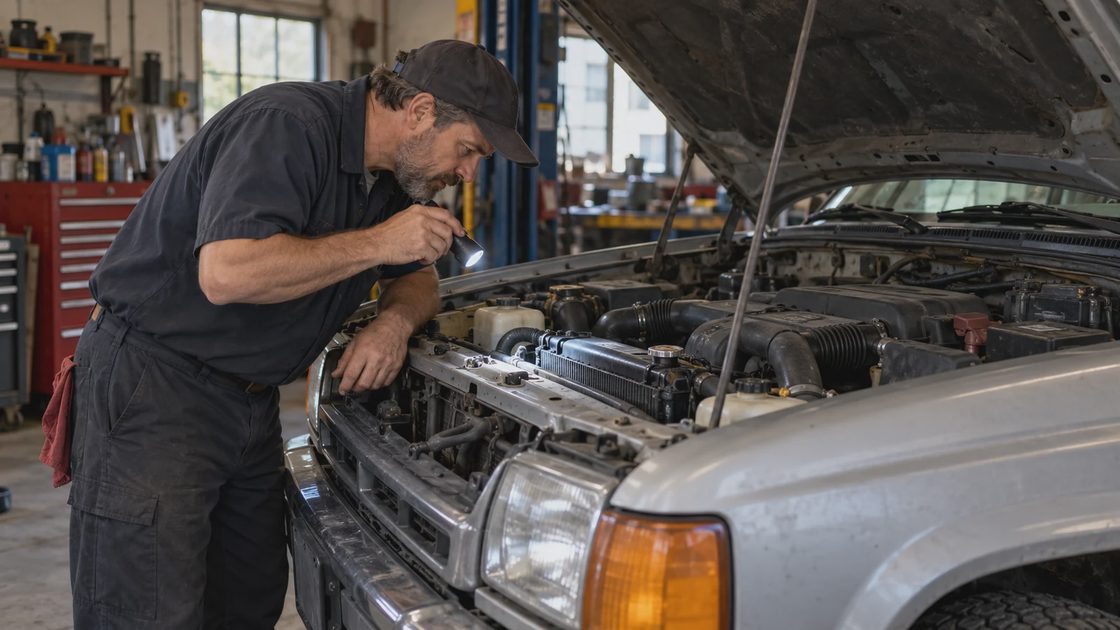
A historical Nissan warranty-extension document covers 2005–2010 Frontier, Pathfinder, and Xterra vehicles with automatic transmissions. It describes an internal radiator oil-cooler leakage concern and associated component damage.
That makes a 2007 Nissan Frontier or 2010 Nissan Frontier automatic worth investigating specifically. Ask about radiator and transmission repairs, obtain invoices, and have a qualified shop assess the current cooling and transmission systems. A seller’s “radiator replaced” statement leaves important questions unanswered: when, why, with what part, and whether contamination or transmission damage was found.
The old extension had time, mileage, and other terms. It is not evidence that a purchase today comes with free repairs. Also, the stated concern concerns specified automatics; do not use it as a diagnosis of every manual truck or every later year.
I ask specifically about radiator and transmission repairs on 2005–2010 automatic Frontiers. In the service records I reviewed, examples with incomplete cooling-system history more often returned later with transmission concerns that required further diagnosis. The old warranty extension does not cover a purchase today. I keep that difference in the repair reserve and the offer calculation.
2014–2017: compare configuration before paying the age premium
Nissan’s 2014 specifications and 2017 lineup show why “Frontier” is an incomplete description. Cab, engine, transmission, bed, and drivetrain combinations differ.
A 2014 Nissan Frontier may offer a useful middle ground for your budget. A 2017 Nissan Frontier may justify more money through condition, lower mileage, or needed equipment. Neither earns that premium simply by sitting outside the earlier radiator document’s year range. Removing one historical concern does not establish the rest of the vehicle’s health.
Let the frame decide whether small repairs are worth pricing
Ask for an underside inspection on professional lifting equipment. Surface rust and deterioration of a load-bearing area require different decisions; a photograph cannot reliably establish the difference. Request a written explanation of the location, severity, and repair implications.
Look beyond the frame’s most visible side. Mounting points, brake lines, bed supports, previous repairs, and concealed areas deserve attention. Fresh paint or undercoating calls for an explanation of when and why it was applied.
A well-kept cabin is encouraging, but it cannot cancel a serious structural finding. If the shop cannot establish a satisfactory repair path, move on before spending time pricing a stereo, tires, or cosmetic improvements.
Read signs of work without inventing an abuse story
Scratches in a pickup bed show use; they do not automatically show misuse. The useful question is whether loading, towing, modifications, or damage left a problem you would inherit.
Ask the inspector to check:
Tailgate hinges, latches, and bed mounting areas.
Hitch mounting and wiring where towing equipment is fitted.
Uneven tire wear, steering concerns, leaks, and abnormal driveline noise.
Nonstandard suspension or tire changes and their installation quality.
Whether accessories obstruct access to maintenance points or conceal damage.
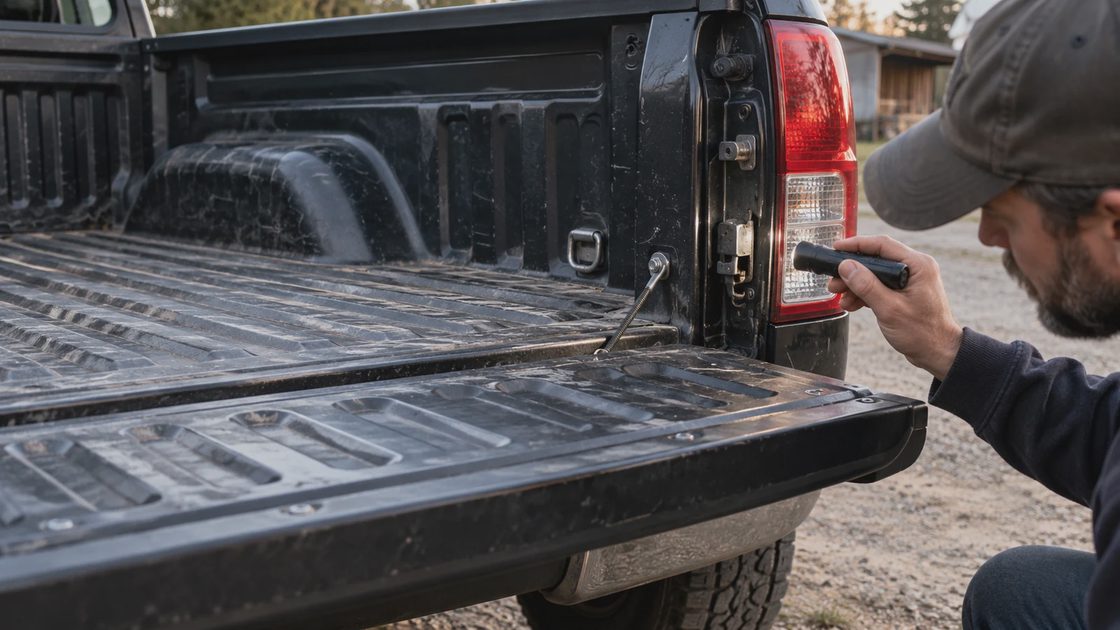
A bedliner can hide dents as well as protect against them. A clean receiver does not prove the truck never towed. Treat visible clues as reasons to ask better questions, not as evidence for a fictional history.
Check repair support before buying an unusual version
An older truck’s repairability depends partly on the help available around you. Before committing, give the intended shop the actual year, engine, transmission, and drivetrain, and ask whether it can inspect and maintain that combination. A general willingness to work on Nissan vehicles is less useful than an answer about this configuration.
For known work, request an estimate that distinguishes available parts, special-order parts, labor, and remaining diagnostic uncertainty. Ask whether the truck can remain safely usable while waiting or will need to stay at the shop. Those are practical questions about your transport plan, not an attempt to predict every future failure.
Check the equipment needed to complete ordinary ownership as well: functioning keys, specified spare-wheel equipment, tailgate operation, and access to the bed with any installed cap or storage system. Price missing items that you actually need. An accessory can solve a problem while creating another one, such as making your normal load impossible to lift or blocking the spare-wheel access route.
If the seller offers a box of removed parts, ask what changed and why. Do not treat spare components as evidence that the modification was installed correctly or that returning the truck to standard will be simple. Have the shop evaluate the current arrangement and quote any necessary reversal before assigning value to it.
Four-wheel drive needs a reason and an inspection
If your routes justify four-wheel drive, have its operation evaluated under appropriate conditions and according to the owner’s manual. Avoid improvised tests on high-grip pavement or aggressive demonstrations on public roads.
If you do not need it, compare the simpler configuration available locally on price and condition. Four-wheel drive adds components to inspect and maintain; it does not improve every ownership decision. Tires and the driver’s judgment also remain important when conditions deteriorate.
The same logic applies to off-road trim. Equipment can serve a real purpose, but an appearance package or oversized tire is not a substitute for a sound truck. Verify the hardware instead of paying for a story about capability.
Make downtime part of the offer
Before buying, ask who will repair this truck and how you will travel while it is unavailable. Someone with a second vehicle can accept a repair delay that a one-car household cannot.
Separate a written estimate for known work from an unresolved symptom. A diagnosed brake repair can be included in the offer calculation. An unexplained transmission complaint cannot responsibly be entered as zero because the seller thinks it is minor.
Check current recall information with Nissan using the VIN, and request the paperwork behind claimed campaign work. That inquiry answers a different question from the independent inspection; you need both kinds of evidence.
The truck worth bringing home
Keep an older Frontier on the shortlist when its structure, configuration, and documented mechanical condition suit a specific job. Leave room for repairs and the possibility of downtime instead of spending the whole budget on the truck itself.
Before the next viewing, send the seller your required cab, bed, drivetrain, and inspection conditions. That turns a broad search across seventeen model years into a short list of trucks that might actually work for you.